
Podcasts

VRS674 - What Hyperlocal Really Means, and Why the Owner Is the Real Customer

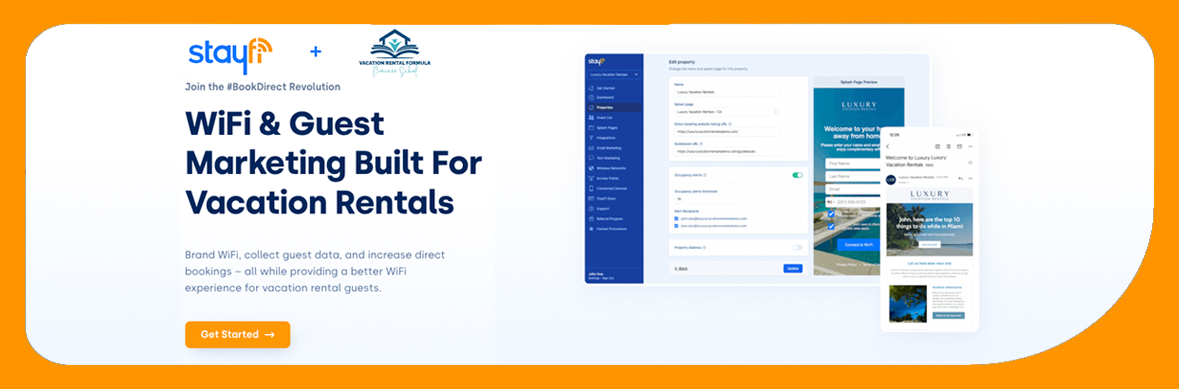
This Episode is Sponsored by StayFi
Your ultimate tool for Vacation Rental WiFi marketing allowing you to collect guest emails automatically via custom captive WiFi login splash pages. Drive repeat direct bookings and convert your OTA bookings to book direct for their next visit.
Visit https://stayfi.com/vrsuccess/ and use code VRSUCCESS for 50% off 3 months of StayFi service.
This episode started on LinkedIn. Gil Chan posted about hyperlocal property management, using VueStay Vacations, a newly launched company with 4,500 homes across eight states, built on centralized revenue management and marketing through the Casago franchise network, as his example. Richard Vaughton replied that hyperlocal is as much about owner relationships as local market knowledge, and that the relationship piece is increasingly getting forgotten. That comment is where this conversation begins.
Heather's guest is Richard Vaughton, a short-term rental consultant with close to thirty years in the industry and a career built on starting, scaling, and selling companies: an Italian rental business grown to roughly 800 properties, a UK company in Torquay, a PMS technology startup, and a VP role at Stay Alfred during its collapse in the pandemic. The two have known each other for more than twenty years, and this is an unscripted, fireside-style conversation rather than a structured interview.
Listeners will come away with a clearer, more operational definition of hyperlocal, a look at why some of the industry's best-known roll-ups have failed while others have scaled successfully by staying local, and a reminder that the piece of this business that most often determines a guest's review, and an owner's trust, is not technology or marketing. It is cleaning.
Key Takeaways
- Hyperlocal is an operating decision, not a marketing word: it means real local staff, a genuine local reputation, and a company culture rooted in one place, not a national brand run by a distant account manager.
- The owner, not the guest, is the most important person in the ecosystem. Without a well cared-for owner there is no polished product to offer a guest in the first place.
- Large-scale roll-ups have historically broken at the point where they centralize everything beyond accounts and revenue management, while UK consolidators like Sykes Cottages, Awaze, and Travel Chapter have grown large by staying hyperlocal at a national scale, keeping local offices and local staff as they expanded.
- AI is freeing up enough staff time that teams can spend it on relationship-building rather than admin, such as calling every guest and owner after checkout with nothing to sell, just a thank you.
- Culture, trust, and local relationships are the parts of this business that resist mechanization. Reporting, revenue management, and communication can be automated; the relationship at the center of it still has to be built by a person.
Resources and Links Mentioned
- Richard Vaughton, Yes Consulting
- Richard's LinkedIn
- ceoshort.com: Richard's referral-only showcase of well-run short-term rental management companies
- Jayne's Cottages (Jayne McCaw), Muskoka, Ontario, referenced as an example of a founder-led, hyperlocal brand
- Sykes Cottages, Awaze, and Travel Chapter, UK consolidators referenced as examples of hyperlocal growth at scale
Connect with Richard Vaughton
If this conversation resonated, you can find Richard on LinkedIn, learn more about his consulting work at Yes Consulting, and see the companies he considers the industry's best at ceoshort.com.
